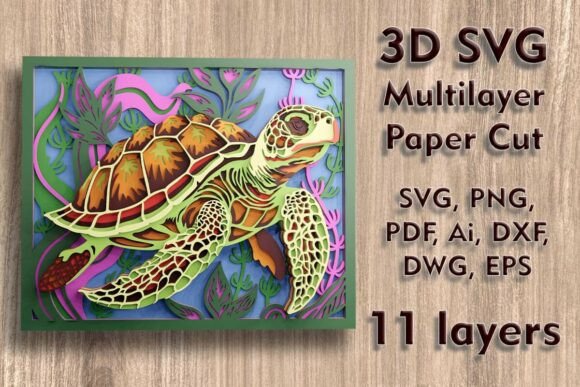
Sea Turtle 3D Multilayer Paper Cut File Evaluation
Crafting enthusiasts and digital fabricators often seek designs that offer both visual depth and structural integrity. The Sea Turtle 3D Multilayer Paper Cut File represents a specialized digital asset designed for creators who wish to produce dimensional wall art, shadow boxes, or decorative installations. This evaluation explores the technical specifications, material versatility, and practical applications of this SVG design, helping you determine if it aligns with your current project requirements.
Understanding the Design Specifications
The core of this product is a high-resolution vector file set featuring an 11-layer composition. The standard dimensions provided are 292 mm in width by 238 mm in height (approximately 11.5 x 9.4 inches). This size is substantial enough to serve as a focal point for home decor while remaining manageable for most desktop cutting machines and smaller laser engravers.
A critical aspect of any multilayer design is scalability. While the file allows for easy enlargement, reducing the scale requires caution. As the design is scaled down, thin elements within the intricate cut lines may become too fragile to cut cleanly or may detach during the weeding process. Therefore, maintaining the original proportions or scaling up is generally recommended for the best results, particularly when using materials with less tensile strength.
Material Versatility and Machine Compatibility
One of the primary advantages of the Sea Turtle 3D Multilayer Paper Cut File is its broad compatibility across various fabrication methods. It is not limited to a single medium; rather, it is engineered to work with a wide spectrum of materials and machines.
Supported Materials
- Paper & Cardstock: Ideal for lightweight shadow boxes and paper art displays.
- Wood & Plywood: Suitable for CNC routers and laser cutters seeking a natural, rustic aesthetic.
- MDF (Medium Density Fiberboard): Offers a smooth surface for painted finishes.
- Acrylic: Provides a modern, translucent look when backlit.
- Aluminum: Can be used with specific laser settings for metallic accents.
Machine Compatibility
The file formats included ensure that users of different technologies can utilize the design effectively:
- Cricut & Silhouette Users: The SVG and layered SVG files are optimized for blade-based cutting machines, allowing for precise cuts on cardstock, vinyl, and thin wood veneers.
- Laser Cutter (Glowforge) Users: The DXF, DWG, EPS, AI, and PDF files provide the necessary vector data for laser engraving and cutting operations.
- CNC Router Users: The inclusion of DXF and DWG formats ensures compatibility with computer numerical control machinery for deeper relief effects.
File Format Breakdown
Upon purchase, the download includes a ZIP folder containing multiple file types. Understanding these formats is essential for successful production:
- SVG (Scalable Vector Graphics): The standard format for most cutting machines, preserving layer information.
- Layered SVG Files: These allow software like Cricut Design Space or Silhouette Studio to recognize individual layers, enabling separate color coding and cutting paths for each of the 11 depths.
- DXF & DWG: Industry-standard vector formats preferred by CAD software and laser cutting programs.
- EPS & AI: Encapsulated PostScript and Adobe Illustrator files, useful for professional graphic design workflows or pre-processing before export.
- PNG & PDF: Raster and document formats provided for reference, previewing, or printing guide sheets.
Benefits of Using a Multilayer Design
Creating a 3D effect from a 2D file offers several distinct benefits over flat decals or single-layer prints.
Visual Depth and Realism
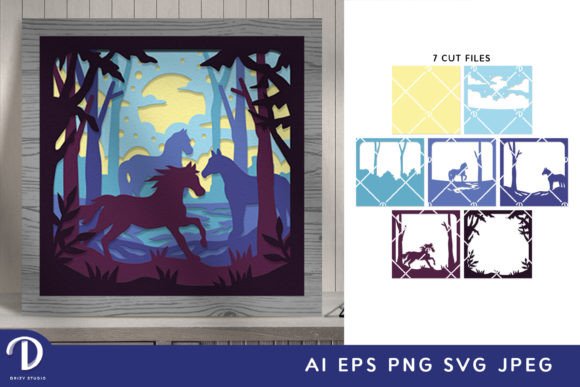
The 11 separate layers create a parallax effect. By spacing the layers apart, the design gains significant depth, making the sea turtle appear to swim through the water. This technique transforms a simple silhouette into a complex piece of art that changes appearance depending on the viewing angle and lighting.
Customization Potential
Because the layers are separated digitally, crafters have the freedom to choose different colors for each stratum. A common approach is to use varying shades of blue to simulate ocean depth, or to contrast a white turtle against a dark background. This flexibility allows the final piece to match existing interior decor themes.
Reusability
As a digital purchase, the files can be used repeatedly. You can produce one unit for personal use, sell multiple copies at craft fairs, or create custom gifts for friends and family without additional licensing fees per unit.
Considerations and Tradeoffs
While the design is versatile, there are practical considerations that potential buyers should evaluate before proceeding.
Assembly Complexity
An 11-layer design implies a multi-step assembly process. Each layer must be cut, weeded (if applicable), and then adhered to the next layer in sequence. This requires patience and precision. Glue placement must be careful to avoid seeping through thin sections or warping delicate materials like paper.
Structural Integrity
When working with paper or thin cardstock, the resulting object is lightweight but fragile. If the goal is a durable, long-lasting installation, heavier materials like plywood or acrylic are preferable. However, these materials require more robust equipment and potentially post-processing (such as sanding or painting) to achieve a polished look.
Scaling Limitations
As noted earlier, reducing the size of the design is risky. If you attempt to shrink the file significantly, the gaps between layers may disappear, or the fine details of the turtle’s shell and flippers may break off during cutting. It is advisable to test a small section of the design on scrap material before committing to the full build.
Situational Fit: Who Is This For?
This design is a strong fit for the following scenarios:
- Home Decor Enthusiasts: Individuals looking to add unique, nature-inspired art to their living spaces, nurseries, or bathrooms.
- Small Business Owners: Crafters selling handmade goods at markets or online platforms like Etsy. The ability to switch between materials (e.g., offering a paper version for lower price points and wood for premium tiers) adds business value.
- Educators and Students: Teachers using CNC or laser cutters in maker-spaces can use this design to teach concepts of dimensionality, layering, and vector graphics.
Conversely, alternatives may be worth considering if:
- You require a quick, single-piece solution without assembly time.
- You lack the software knowledge to manage layered SVG files.
- Your machine does not support the specific file formats provided (though most modern machines support SVG/DXF).
Conclusion
The Sea Turtle 3D Multilayer Paper Cut File is a robust digital tool for creating dimensional art. Its compatibility with multiple machines and materials makes it a flexible investment for serious hobbyists and professionals. However, success depends on proper handling of the layering process and awareness of material limitations regarding scale. By understanding these dynamics, you can effectively integrate this design into your crafting workflow and produce high-quality, visually striking results.