Unwrapping Charm: Why the Kawaii 3D Printable Snail is the Perfect Starter Project for Your Printer
In the rapidly evolving world of additive manufacturing, finding the perfect balance between aesthetic appeal and technical simplicity can sometimes feel like a challenge. Whether you are holding your first FDM printer or have a resin setup ready for high-detail work, there is a specific category of models that stands out for its ability to deliver immediate satisfaction without demanding complex troubleshooting. Enter the kawaii 3D printable snail figurine. This adorable digital asset is not just another model in a library; it represents a bridge between beginner-friendly design and polished, display-worthy art.
This article explores why this particular snail STL has become a favorite among hobbyists, parents, and educators alike. We will delve into the design philosophy behind "kawaii" aesthetics in 3D printing, analyze the technical benefits of its optimized geometry, and provide practical advice on how to get the best results from your machine.
The Appeal of Kawaii Design in Additive Manufacturing
To understand the popularity of this figurine, one must first understand the concept of kawaii. Originating from Japanese culture, kawaii translates roughly to "cute," but in the context of design, it implies a specific set of visual characteristics: softness, roundness, innocence, and approachability. When applied to 3D modeling, these traits translate directly into printability.
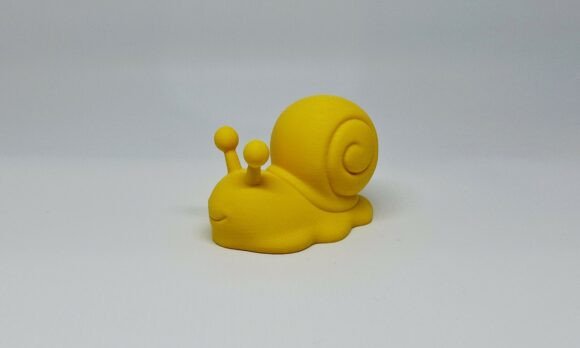
Unlike hyper-realistic sculptures that require intricate supports, delicate overhangs, and precise calibration, a kawaii-style object is designed with forgiveness in mind. The snail featured in this collection boasts a smooth body, a sweet smile, and a simple spiral shell. These elements are crucial because they minimize the need for post-processing. For beginners, the anxiety of removing support structures or sanding away layer lines can be a significant barrier to entry. By choosing a model with clean, rounded edges, you remove much of that friction, allowing the focus to remain on the joy of creation rather than the mechanics of repair.
Technical Breakdown: Why This STL is Beginner-Friendly
From a technical standpoint, the success of any 3D print lies in the quality of its source file. The STL file provided for this snail has been meticulously optimized for both FDM (Fused Deposition Modeling) and resin printers. Here is a closer look at what makes this geometry so robust:
- Clean Geometry: The mesh is watertight and free of non-manifold edges. This ensures that slicing software can interpret the model correctly, reducing the risk of failed prints due to corrupted data.
- Stable Base Design: One of the most common failures in 3D printing is warping or detachment from the build plate. This snail features a broad, flat bottom section that provides excellent bed adhesion. It is stable enough to stand upright without additional structural reinforcement.
- No Supports Required: Thanks to its low center of gravity and gentle curves, this model generally prints without the need for support structures. This saves filament, reduces print time, and eliminates the tedious task of cleaning up sticky residue left by supports.
- Layer Height Compatibility: While the model looks stunning at fine resolutions, it is forgiving enough to look great at standard layer heights. This makes it an excellent candidate for testing new materials or calibrating a new printer.
Material Matters: Choosing the Right Filament
While the digital file is universal, the physical result depends heavily on the material you choose. The recommended materials for this snail include PLA (Polylactic Acid) and PETG (Polyethylene Terephthalate Glycol).
Why PLA is the Top Choice
PLA remains the gold standard for beginners and decorative prints. It offers a wide range of colors, including pastel shades that perfectly complement the kawaii aesthetic. If you want your snail to look soft and inviting, opt for matte PLA or a silk PLA that adds a subtle sheen to the spiral shell. The test prints mentioned in the product description were conducted using Sunlu PLA on a Bambu Lab A1 Mini, demonstrating that even compact, entry-level machines can produce professional-grade results with this model.
The Case for PETG
If you plan to place your snail in a high-traffic area or outdoors, PETG might be a better choice. It is more durable and heat-resistant than PLA. However, PETG can be stringier during printing, so ensure your retraction settings are tuned correctly to maintain the smooth surface finish that defines this character’s charm.
Practical Applications: More Than Just a Toy
One of the misconceptions about small-scale 3D prints is that they are merely toys. In reality, the versatility of the kawaii snail extends across various aspects of modern life, from education to interior design.
Desk Décor and Productivity
In the era of remote work, personalizing our digital environments has become a way to combat screen fatigue. Placing a cute, colorful snail on your desk serves as a tactile reminder to slow down—a nod to the animal's natural pace. It acts as a focal point that breaks up the monotony of monitors and keyboards, adding a touch of whimsy to the workspace.
Educational Tools
For parents and teachers, this model is an excellent educational tool. It can be used to teach children about biology, specifically mollusks, while introducing them to the basics of 3D printing. You can discuss the anatomy of the shell, the concept of spirals in nature (the Fibonacci sequence), and the process of digital-to-physical transformation. Painting the snail together can also foster creativity and fine motor skills in young learners.
Gifting and Personalization
In a market saturated with mass-produced items, handmade gifts hold immense value. Because the STL is a digital download, you can print multiple copies in different colors and customize them through painting. Adding details like glitter eyes, painted spots, or a tiny hat transforms the basic model into a unique gift for birthdays, holidays, or teacher appreciation weeks.
Printing Tips for Optimal Results
To ensure your snail turns out exactly as envisioned, consider these practical tips based on community feedback and testing data:
- Bed Adhesion: Although the base is stable, applying a thin brim can further prevent lifting, especially if you are using a surface that doesn't grip well. Ensure your bed is level and clean before starting.
- Nozzle Temperature: Stick to the manufacturer’s recommendations for your chosen filament. For PLA, this is typically between 190°C and 210°C. Consistent temperature leads to consistent layer bonding.
- Post-Processing: If you notice minor layer lines, a light sanding with fine-grit sandpaper followed by a primer coat can make the surface incredibly smooth. This is particularly effective if you plan to paint the figure.
- Scale Variations: While the default size is approximately 4.4 cm in width, slicer software allows you to scale the model up or down. Be cautious when scaling up significantly, as larger volumes may increase print time and the risk of warping.
Digital Ownership and Accessibility
It is important to note that purchasing this model grants you a digital download of the STL file. No physical item will be shipped. This model aligns with the growing trend of digital ownership in the maker community. You own the license to print the file for personal use, allowing you to create as many copies as you wish for your home or classroom. This accessibility empowers users to iterate on their designs, experiment with colors, and share their creations within their local communities.
Conclusion
The kawaii 3D printable snail figurine is more than just a cute addition to a shelf; it is a testament to the democratization of design. By combining charming aesthetics with robust, easy-to-print geometry, it lowers the barrier to entry for new makers while satisfying the desire for quality in experienced ones. Whether you are looking to decorate your office, engage your children in STEM activities, or simply enjoy the meditative process of watching a layer-by-layer creation come to life, this snail offers a delightful solution. With its compatibility with popular printers like the Bambu Lab A1 Mini and its forgiving nature towards materials like PLA, it stands as a versatile and reliable choice for anyone looking to add a touch of charm to their 3D printing journey.