3D Layered Paper Flower: A Digital Asset Evaluation
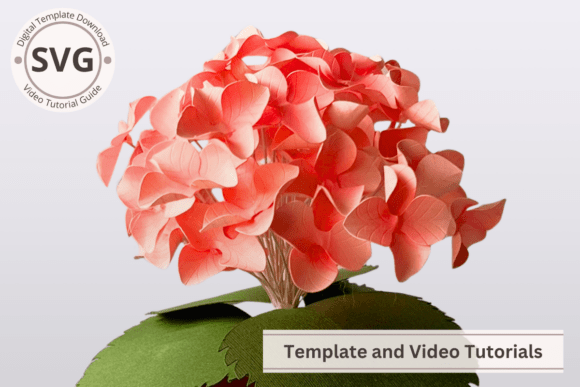
In the landscape of digital crafting and design, the demand for high-quality, versatile assets has never been higher. Among the most popular categories for creators, educators, and small business owners are decorative elements that offer depth and visual interest without the complexity of three-dimensional modeling software. The 3D Layered Paper Flower stands out as a prime example of this utility. It is not merely a flat image but a structured collection of vector layers designed to simulate physical depth when printed and assembled. For professionals in marketing, DIY enthusiasts, and educators looking to produce tangible materials, understanding the technical specifications and practical applications of such a file is crucial before purchase.
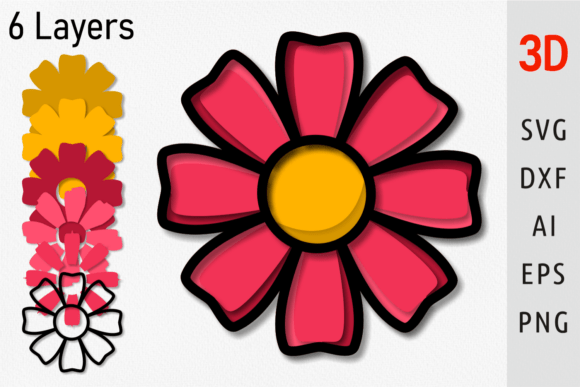
This evaluation focuses on the specific digital product offering described as an instant download containing multiple file formats. By analyzing the components included—SVG, DXF, PNG, EPS, and PDF—and the structural nature of the nine-layer design, we can determine its suitability for various workflows. The goal is to provide a clear, objective assessment of what this asset brings to the table, who it serves best, and how it performs in real-world production scenarios.
Understanding the Digital Format and File Structure
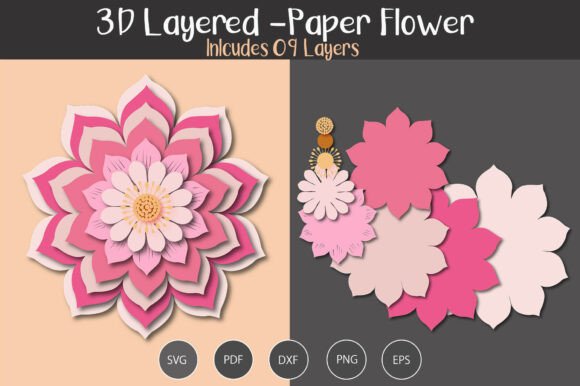
The core value of any digital craft asset lies in its compatibility and ease of use. The listing specifies that buyers receive a single ZIP file containing five distinct formats. This variety is significant because it allows the user to select the tool that best fits their specific hardware and software ecosystem. Understanding these formats helps clarify why this particular 3D Layered Paper Flower is designed for print-based creation rather than screen-only display.
- SVG (Scalable Vector Graphics): This is the industry standard for cutting machines like Cricut and Silhouette. The SVG format ensures that the lines remain crisp regardless of size, allowing users to scale the flower from a small card embellishment to a large wall decoration without pixelation. For professionals using vinyl or cardstock, this is the primary working file.
- DXF (Drawing Exchange Format): Often used in conjunction with CAD software or more advanced cutting plotters, the DXF file provides an alternative vector structure. While similar to SVG, some older or specialized machinery may prefer DXF for parsing layer data accurately.
- PNG (Portable Network Graphics): Included as a raster image, the PNG serves a different purpose. It is useful for previewing the final look, incorporating into digital designs via Canva or Photoshop, or printing directly if the user does not have access to a cutting machine. However, for true 3D assembly, the vector files are superior.
- EPS (Encapsulated PostScript): Essential for professional graphic designers using Adobe Illustrator or InDesign. The EPS file allows for seamless integration into larger layout projects, ensuring that the flower can be manipulated alongside other typography and graphics while maintaining vector integrity.
- PDF (Portable Document Format): The PDF acts as both a reference document and a printable template. It often contains all layers stacked or separated for easy printing at home. This is particularly valuable for educators or hobbyists who want to test the design on standard printer paper before committing to expensive cardstock or specialty materials.
The inclusion of these five formats demonstrates a thoughtful approach to user accessibility. It removes the barrier of entry for those who may only own a basic printer, while still providing robust options for commercial-grade production environments.
Technical Specifications and Assembly Logic
The defining characteristic of this product is its nine-layer construction. Unlike a single-image representation of a flower, a 3D Layered Paper Flower relies on the physical separation of elements to create volume. Each layer represents a petal group or a structural component that, when cut out and glued in sequence, builds upward toward the center of the bloom.
From a technical standpoint, the precision of the cut lines is paramount. If the vector paths are not closed correctly or if the layer registration points are misaligned, the final assembly will appear skewed or unstable. Based on the standard quality associated with reputable digital craft sellers, these files typically feature clean node structures and logical grouping. This means that in design software, each of the nine layers should be easily selectable, movable, and resizable independently.
The "instant download" nature of the product implies immediate availability, which is critical for time-sensitive projects. Whether a blogger needs last-minute visuals for a spring-themed post or a small business owner is fulfilling a rush order for wedding favors, the ability to access the ZIP file immediately after payment eliminates logistical delays. There is no shipping wait time, no risk of postal damage, and no inventory management required by the buyer.
Practical Applications and Use Cases
The versatility of the 3D Layered Paper Flower extends across several professional and creative domains. Its primary application is in physical craft projects, but its utility reaches further into digital content creation and event planning.
Physical Craft and Home Decor
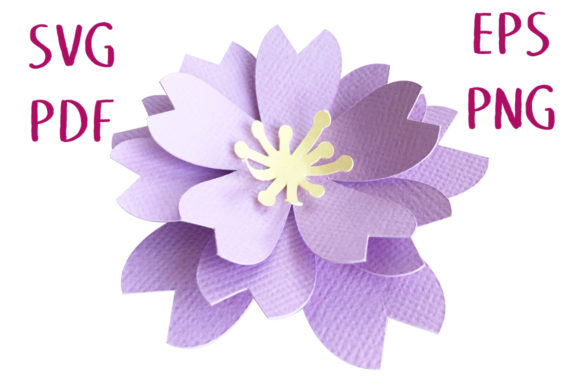
For serious hobbyists and makers, this asset is ideal for creating wall art, greeting cards, scrapbook pages, and party decorations. The nine-layer design offers enough complexity to look intricate and high-end, yet remains manageable for assembly. Users can experiment with different paper weights and textures—such as kraft paper for a rustic look or metallic foil paper for a luxurious finish—to achieve unique aesthetic results. Because the file is scalable, one set of files can produce dozens of variations in size, making it cost-effective for bulk production.
Event Design and Wedding Industry
Wedding planners and event decorators frequently seek affordable alternatives to fresh flowers. Fresh blooms are perishable, expensive, and require climate control. A printed and assembled 3D Layered Paper Flower offers a permanent solution that maintains its shape and color indefinitely. These can be used as table scatter, backdrop elements, or even incorporated into invitations. The digital nature of the source file allows for quick customization; for instance, changing colors digitally before printing to match a specific wedding palette.
Digital Content and Marketing
While the primary intent is physical assembly, the PNG and vector files also serve digital purposes. Marketers and bloggers can use the layered structure to create animated graphics or composite images in photo editing software. By isolating individual petals, a designer can create dynamic compositions that would be difficult to photograph physically. This dual-use capability adds value beyond the initial craft project.
Evaluating Quality, Usability, and Limitations
When assessing the effectiveness of this digital asset, several factors come into play regarding quality and usability. The reliance on user equipment is both a strength and a limitation. Since the product is a digital file, the final output quality is dependent on the user’s printer resolution, cutting machine accuracy, and adhesive techniques. A poorly calibrated cutter may result in jagged edges, undermining the clean lines provided by the vector file.
Furthermore, the assembly process requires patience and precision. Gluing nine layers together demands careful alignment to ensure the flower sits flat and looks symmetrical. Beginners may find the learning curve steeper compared to using pre-made physical crafts. However, for those willing to invest the time, the result is a customizable product that cannot be found in retail stores. This exclusivity is a key selling point for entrepreneurs looking to differentiate their handmade goods.
Another consideration is the lack of physical guidance. As an instant download, there is no instruction booklet included in the mail. Users must rely on their own skills or external tutorials to understand how to assemble the layers effectively. This places the responsibility of execution squarely on the buyer, which is standard for digital products but worth noting for novice crafters.
Who Benefits Most?
The 3D Layered Paper Flower is best suited for individuals and businesses that value customization and scalability. Small business owners producing handmade jewelry tags, boutique gift boxes, or personalized stationery will find immense value in having a proprietary design element they can reproduce infinitely. Educators teaching geometry or art can use the layered concept to demonstrate principles of perspective and construction. Freelance graphic designers can incorporate the vector elements into branding packages for clients seeking organic, natural motifs.
Conversely, consumers looking for a ready-to-hang decoration may find this product less suitable. The requirement to print, cut, and assemble means it is a project-based purchase rather than a finished good. For those seeking convenience over creativity, traditional retail options might be preferable. However, for the target audience of creators and professionals, the trade-off between effort and customization is highly favorable.
Final Considerations on Value and Workflow Integration
In conclusion, the 3D Layered Paper Flower digital file represents a efficient solution for integrating complex, three-dimensional aesthetics into two-dimensional workflows. By providing multiple file formats, it bridges the gap between simple home printing and professional commercial cutting. The nine-layer design offers substantial visual impact, transforming simple paper into a sophisticated decorative element.
The absence of a physical product is clearly communicated, ensuring that buyers have realistic expectations. The instant delivery model supports agile project management, allowing for rapid iteration and fulfillment. While it requires skill and equipment to realize its full potential, the asset itself is robust, versatile, and well-structured for a wide range of applications. For anyone involved in the creation of physical or digital media, adding this type of high-fidelity vector asset to their library is a practical decision that enhances both the quality and variety of their output.