3D Amusement Park Laser Cut Bundle CNC: A Strategic Guide to Digital Asset Integration
In the landscape of modern digital fabrication, the distinction between a simple decorative item and a strategic business asset often lies in the quality of the source files. The 3D Amusement Park Laser Cut Bundle CNC represents more than just a collection of holiday-themed graphics; it is a comprehensive toolkit designed for precision manufacturing. For entrepreneurs, hobbyists, and small business owners operating within the maker economy, understanding how to leverage high-quality vector assets is critical for maintaining efficiency, ensuring product consistency, and scaling production without compromising creative integrity.
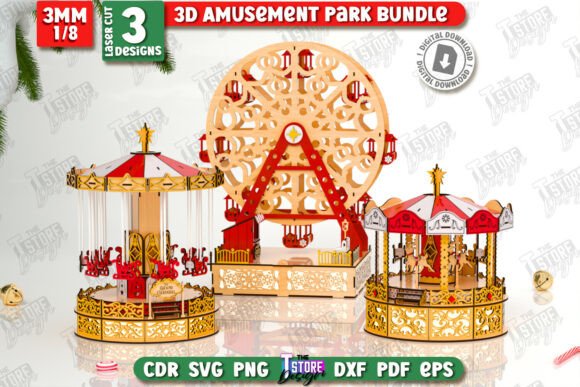
This bundle, which includes models such as the Christmas Carousel SVG Ferris Wheel and Mini Vintage Swing Carousel, is engineered specifically for laser cutting machines. However, treating these files as mere "printables" misses their true potential. To achieve optimal results, one must approach the 3D Amusement Park Laser Cut Bundle CNC with a clear operational strategy, paying close attention to file compatibility, software limitations, and the physical properties of the materials being used.
Understanding the Technical Architecture of the Bundle
The value of any digital product intended for CNC or laser cutting applications is defined by its versatility and precision. This specific bundle is structured to accommodate a wide range of workflows by providing multiple file formats within a single zip archive. When you acquire this product, you are not receiving a single static image but a multi-format suite comprising:
- 3 SVG Files: Ideal for web-based design tools and scalable vector graphics that maintain resolution at any size.
- 3 EPS Files: Standard exchange format for professional design software like Adobe Illustrator, ensuring color fidelity and complex path data.
- 3 PNG Files (Transparent): Useful for previewing designs on various backgrounds before committing to material cuts.
- 3 PDF Files: Portable Document Format files that preserve layout and vector data, suitable for both viewing and certain direct-cut workflows.
- 3 DXF Files: Drawing Exchange Format files, widely regarded as the most reliable standard for interoperability between different CAD and CAM software environments.
For decision-makers in small businesses or freelance operations, having access to all these formats allows for flexibility. You can test designs in lightweight software using SVGs, refine them in professional suites using EPS, and send the final job to the machine using DXFs. This redundancy reduces downtime caused by file corruption or incompatibility issues.
Strategic Software Selection: The Lightburn Consideration
One of the most common pitfalls in laser cutting operations is assuming that all vector formats behave identically across different software platforms. While SVG is a universal standard for web graphics, it can sometimes introduce dimensional distortions when imported into certain laser control software. Specifically, users of Lightburn may encounter discrepancies where the physical dimensions of the cut do not match the intended scale, particularly when working with complex SVG files.
To mitigate this risk and ensure precision—a non-negotiable factor in creating sellable products—strategic practitioners should prioritize the use of DXF file formats when working within Lightburn. The DXF format offers a more robust translation of geometric data, minimizing the likelihood of scaling errors that could ruin expensive materials or delay order fulfillment. By adhering to this protocol, you protect your profit margins and uphold a reputation for quality.
If you find yourself needing alternative file types, such as a specific color variation of a PNG for marketing purposes or a different format for a specialized workflow, direct communication with the creator is advised. Proactive engagement ensures that your technical requirements are met, allowing you to focus on production rather than troubleshooting file conversions.
Application Scenarios and Market Positioning
The inclusion of themes like the "Christmas Carousel," "Ferris Wheel," and "Mini Vintage Swing" places this bundle squarely within the seasonal decor market. However, the application extends beyond simple holiday decorations. These 3D models are designed to create depth and dimension, making them suitable for shelf sitters, layered wall art, and interactive displays. Understanding where these products fit in the broader market helps in positioning your offerings effectively.
Seasonal Retail Strategy
For small business owners, timing is everything. The demand for festive decorations peaks rapidly during the fourth quarter. By integrating the 3D Amusement Park Laser Cut Bundle CNC into your inventory early, you can capitalize on pre-holiday sales. The ability to produce intricate details, such as the swings on the carousel or the spokes of the ferris wheel, adds perceived value to your products. Customers are willing to pay a premium for items that demonstrate craftsmanship and complexity, which are difficult to replicate with mass-produced plastic alternatives.
B2B and Corporate Gifting
Another strategic avenue is corporate gifting. Companies often seek unique, handcrafted items for client appreciation or employee rewards. A custom-branded shelf sitter featuring a vintage carousel motif can serve as a memorable desk accessory. By offering customization options—such as changing colors via the provided PNGs or adjusting sizes through the scalable vector files—you open up a B2B revenue stream that complements direct-to-consumer sales.
Educational and Hobbyist Markets
For educators and hobbyists, these files serve as excellent teaching tools for geometry, spatial reasoning, and digital fabrication. The layered nature of the 3D models encourages experimentation with assembly techniques. Creators can use these bundles to run workshops or sell kits, adding value by including instructions alongside the raw digital files. This approach shifts the product from a commodity to an experience, fostering customer loyalty and community engagement.
Risk Management and Quality Control
While the digital files themselves are high-quality, the success of the final product depends heavily on the execution. Relying on these assets without a clear plan can lead to wasted resources. Several factors must be considered before proceeding with production:
- Material Compatibility: Ensure that the material you choose (wood, acrylic, cardstock) is compatible with your laser cutter’s power settings. Different thicknesses require adjustments in speed and power, which can affect the crispness of fine details like those found in the swing carousel.
- Software Verification: Always verify the dimensions of the design in your cutting software before starting the job. Use the DXF format for Lightburn users to avoid distortion. If using other software, check for any automatic scaling or resizing that may have occurred upon import.
- Assembly Complexity: 3D models require precise alignment. Plan your assembly process beforehand. Are you using glue, pins, or mechanical interlocks? Poor assembly can undermine the visual impact of even the best-cut parts.
Ignoring these considerations can result in failed prototypes, negative reviews, and inventory waste. A strategic approach involves running test cuts on scrap material to dial in settings and verify fit before committing to bulk production.
Long-Term Value and Community Engagement
Purchasing digital assets is an investment in your creative pipeline. By following the creator of this bundle, you gain access to future releases and updates. This relationship is valuable for staying ahead of trends in the maker community. New designs often reflect emerging aesthetic preferences, such as minimalist styles or more complex mechanical models. Staying connected ensures that your product line remains fresh and relevant.
Furthermore, engaging with the creator allows for feedback loops. If you encounter issues or have requests for specific variations, communicating directly can lead to improved file structures or new features. This collaborative dynamic enhances the overall utility of the 3D Amusement Park Laser Cut Bundle CNC, transforming it from a static purchase into a growing resource.
Conclusion on Strategic Implementation
The 3D Amusement Park Laser Cut Bundle CNC is a powerful tool for anyone involved in digital fabrication. Its strength lies not just in the aesthetic appeal of the carousel and ferris wheel designs, but in the technical rigor of the included file formats. By selecting the appropriate file type for your software—preferably DXF for Lightburn users—and adhering to strict quality control measures, you can produce high-value products that stand out in a crowded market.
Success in this space requires more than just owning the files; it demands a thoughtful approach to planning, material selection, and customer communication. Whether you are expanding your retail inventory, launching a new service, or enhancing your educational offerings, this bundle provides the foundational assets needed to execute your vision with precision. Treat these digital assets with the same respect you would give to physical machinery, and they will yield significant returns in creativity, efficiency, and profitability.