3D Pirate Ship Print Cut: A Strategic Guide to Maximizing Value in Craft, Education, and Branding
In an era where digital assets are ubiquitous but physical engagement remains a powerful differentiator, the 3D Pirate Ship Print Cut represents more than just a simple craft project. It is a versatile tool that bridges the gap between digital precision and tactile creativity. Whether you are an educator seeking to enhance student engagement, a small business owner looking for unique party favors, or a marketer aiming to create memorable brand activations, understanding how to leverage this printable 3D model can yield significant returns in terms of time saved, cost efficiency, and creative impact.
The concept is straightforward yet highly adaptable: users download a digital file, print it on their preferred medium, cut out the pieces, and assemble them into a three-dimensional structure. However, the strategic value lies in the execution. By approaching the 3D Pirate Ship Print Cut with intentionality, you transform a passive activity into a dynamic solution for problem-solving, branding, and community building.
Understanding the Asset: Versatility Across File Formats
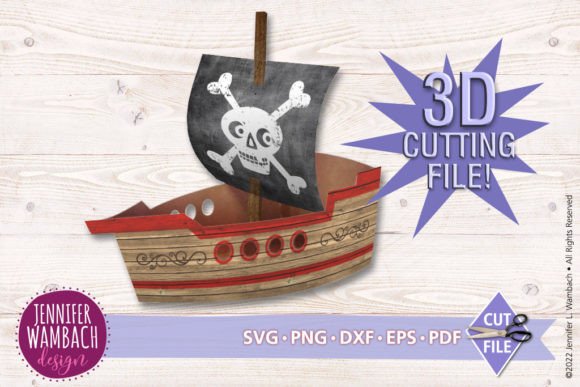
One of the primary advantages of acquiring a high-quality 3D Pirate Ship Print Cut asset is its compatibility with a wide range of software and hardware ecosystems. The inclusion of multiple file formats ensures that whether you are operating at home or within a professional design studio, you have the tools necessary to execute your vision effectively.
- SVG (Scalable Vector Graphics): Essential for users of Cricut Design Space. This format allows for infinite scalability without loss of quality, making it ideal for cutting machines that require precise vector paths.
- DXF (Drawing Exchange Format): Specifically designed for Silhouette Studio Designer Edition and ScanNCut users. This ensures seamless integration for those invested in the Silhouette ecosystem.
- EPS (Encapsulated PostScript): A standard for professional graphic design software such as Adobe Illustrator, Make the Cut, CorelDRAW, and Inkscape. This format is crucial for designers who need to modify the layout, adjust scales, or integrate the ship into larger marketing materials.
- JPG and PNG: Raster images suitable for MS Word, Adobe Photoshop, and other general-purpose programs. These are perfect for quick previews, basic printing, or non-vector-based editing tasks.
- PDF: Universally accessible across all printing programs. This format preserves layout integrity, ensuring that instructions and cut lines remain clear regardless of the device used to open the file.
This multi-format approach reduces friction in your workflow. You do not need to invest in expensive conversion software or hire external experts to adapt the files. Instead, you can immediately begin planning your project, saving both time and resources.
Strategic Applications: Beyond Simple Decoration
While the immediate visual appeal of a 3D pirate ship is undeniable, its utility extends far beyond hanging from a ceiling or sitting on a shelf. Let us explore how this asset can be integrated into broader strategies for education, commerce, and personal development.
Enhancing Educational Outcomes
For educators and homeschooling parents, the 3D Pirate Ship Print Cut serves as an excellent STEM (Science, Technology, Engineering, and Mathematics) learning tool. The process of assembling a 3D object from 2D plans introduces concepts of geometry, spatial reasoning, and structural integrity.
Consider using this craft to teach fractions by discussing how many pieces make up the hull versus the sails. Use it to discuss history and geography when exploring themes of exploration and trade routes. The tangible nature of the project reinforces abstract concepts, leading to better retention and deeper understanding. Furthermore, the collaborative aspect of building the ship fosters teamwork and communication skills among students.
Boosting Event Engagement and Customer Experience
If you are organizing a themed event, birthday party, or corporate team-building exercise, the 3D Pirate Ship Print Cut offers a low-cost, high-impact way to engage participants. Unlike pre-made decorations that sit passively, a DIY assembly station encourages active participation.
Imagine a rainy-day workshop where attendees compete to build the most stable or aesthetically pleasing ship. This activity breaks down social barriers, encourages friendly competition, and creates shared memories. For entrepreneurs, this translates to higher customer satisfaction and increased word-of-mouth marketing. Guests leave with a physical memento of your event, extending the lifespan of your brand’s presence in their homes.
Supporting Small Business Operations
Small business owners often operate with limited budgets. The 3D Pirate Ship Print Cut provides a cost-effective alternative to purchasing expensive thematic decor. By sourcing your own paper or cardstock, you control the quality and sustainability of your materials. Additionally, if you sell handmade goods, these ships can serve as unique add-on items or prizes for loyalty programs.
Moreover, the ability to customize the design—by adding your logo to the sails or changing the color scheme—allows for subtle branding opportunities. This level of customization is difficult to achieve with mass-produced items, giving you a competitive edge in creating a distinctive atmosphere.
Planning and Execution: Best Practices for Success
To maximize the value of the 3D Pirate Ship Print Cut, careful planning is essential. Rushing into the cutting process without considering the end goal can lead to frustration and subpar results. Here are several strategic considerations to keep in mind.
Selecting the Right Materials
The choice of paper significantly impacts the final outcome. Standard printer paper may result in a flimsy structure that struggles to hold its shape. For a more durable and professional-looking ship, consider using cardstock, heavy-weight paper, or even thin cardboard. If you are using a cutting machine, ensure that the material thickness is compatible with your blade settings to prevent jagged edges or incomplete cuts.
Experimentation is key. Test different paper weights and finishes to determine which works best for your specific application. Matte finishes reduce glare, while glossy papers can add a vibrant pop of color. Consider the environment in which the ship will be displayed; outdoor displays require weather-resistant materials.
Optimizing Workflow Efficiency
When dealing with large projects involving multiple copies of the 3D Pirate Ship Print Cut, efficiency becomes paramount. Organize your workspace before you begin. Lay out all necessary tools, including scissors, glue sticks, double-sided tape, and bone folders for crisp folds.
If you are using a digital cutter, batch processing your files can save considerable time. Ensure that your design software is set up to minimize waste by nesting the pieces efficiently on the page. This not only saves material costs but also reduces setup time between cuts.
Maintaining Quality Control
Consistency is vital, especially if you are producing these ships for sale or distribution. Establish a standard operating procedure (SOP) for assembly. Document the steps involved, noting any common pitfalls or areas where extra care is needed. Train anyone assisting in the production process to follow these guidelines strictly.
Regularly inspect your finished products for alignment issues, loose tabs, or adhesive failures. Addressing these issues early prevents negative feedback and protects your reputation. Remember that attention to detail signals professionalism and care, qualities that resonate with customers and clients alike.
Risks and Mitigation Strategies
While the benefits are clear, there are potential risks associated with relying on digital templates without proper context. One common pitfall is underestimating the complexity of assembly. Some 3D models contain numerous small parts that can be easily lost or mixed up. To mitigate this, label each piece clearly during the cutting phase and use separate containers for different components.
Another risk is intellectual property infringement. Ensure that you have the appropriate license to use the 3D Pirate Ship Print Cut for your intended purpose. Commercial use often requires a different licensing agreement than personal use. Review the terms provided with your download carefully to avoid legal complications.
Finally, be mindful of environmental impact. While DIY crafts can be sustainable, excessive use of single-use plastics or non-recyclable adhesives can negate these benefits. Opt for eco-friendly materials whenever possible to align with growing consumer demand for sustainability.
Conclusion: Intentional Creation for Lasting Impact
The 3D Pirate Ship Print Cut is a testament to the power of thoughtful design and accessible technology. It empowers individuals and organizations to create meaningful experiences without requiring extensive resources or specialized skills. By approaching this asset with a strategic mindset, focusing on planning, quality, and purpose, you can unlock its full potential.
Whether you are decorating a child’s room, enhancing a classroom lesson, or elevating a brand event, the key lies in intentional use. Avoid treating the craft as a mere pastime; instead, view it as a strategic tool for communication, engagement, and expression. With the right preparation and execution, a simple paper ship can sail far beyond its physical dimensions, carrying your message and values to new heights.