First Responder Elements 3D SVG: A Practical Guide for Creators and Crafters
If you spend any time in the crafting community, you know that the difference between a good project and a great one often comes down to detail. Specifically, it comes down to how layers interact with each other. This is where First Responder Elements 3D SVG becomes an essential asset for your digital library. These aren’t just flat cut files; they are designed with depth, shadow, and dimensionality baked into their structure. Whether you are preparing for a local fire department fundraiser, creating custom gear for a police officer’s birthday, or designing merchandise for a small business that supports emergency services, having high-quality 3D vector files saves you hours of manual layering and design work.
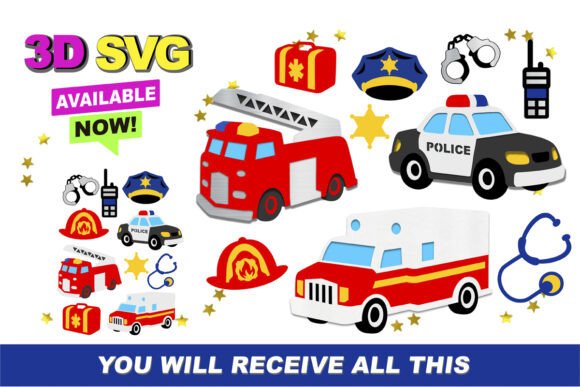
The collection includes an SVG file packaged in a zipped folder, making it easy to organize and store on your computer. But before you dive into the cutting process, it is important to understand exactly what you are getting and how to integrate these files into your existing workflow. This guide breaks down the practical applications, technical considerations, and creative possibilities of using First Responder Elements 3D SVG in your projects.
Understanding the Format and Compatibility
At its core, an SVG (Scalable Vector Graphic) is a file type that uses mathematical equations to define shapes rather than pixels. This means you can resize your design from a tiny sticker to a large banner without losing quality. The "3D" aspect in this context refers to the layered nature of the design. Instead of a single silhouette, the file contains multiple overlapping paths that, when cut from different colored materials, create an illusion of depth.
These files are optimized for popular cutting software ecosystems. If you use Silhouette Studio or Cricut Design Space, you will find that importing these files is straightforward. The software recognizes the individual layers, allowing you to assign different colors to each element easily. This is crucial for achieving the intended 3D effect. However, if you are using a different type of machine or software, please ensure you are able to use this type of file with your machine. Some older vinyl cutters or basic graphic design programs may struggle with complex multi-layered SVGs, so checking compatibility beforehand is a smart move.
Real-World Applications for Personal Projects
One of the most common reasons people download resources like First Responder Elements 3D SVG is for personal gifting and celebration. Emergency responders often wear their badge numbers, unit designs, or department logos with pride. Creating a personalized item that reflects this identity requires precision and style.
- Cake Toppers: For a firefighter’s or paramedic’s birthday, a 3D cake topper adds a professional touch to the celebration. You can cut the elements from sturdy cardstock or acrylic sheets. The layered design allows you to place the main emblem on top, with supporting text or icons underneath, creating a tiered look that stands out against the frosting.
- Birthday Celebrations: Beyond cake toppers, these elements work beautifully as wall decorations or party banners. By cutting different layers from contrasting vinyls or papers, you can create a dynamic backdrop that looks expensive and thoughtfully crafted.
- Personalized Stickers: Small businesses often sell stickers, but hobbyists do too. Using these 3D elements, you can create durable vinyl stickers for water bottles, laptops, or vehicle windows. The depth makes the design pop, even in a small format.
Consider the scenario of a spouse planning a surprise anniversary gift. Instead of buying a generic mug, they could use Cricut Design Space to apply a 3D First Responder Element decal to a travel tumbler. The result is a unique item that shows effort and understanding of the recipient’s profession.
Professional Use Cases for Entrepreneurs and Marketers
For small business owners and marketers, visual appeal is directly tied to sales. Products featuring first responder themes have a dedicated market segment. People want to show support for their local heroes, and high-quality designs command higher prices.
When you use First Responder Elements 3D SVG, you are offering a product that looks premium. Here is how different professionals can leverage these files:
- Print-on-Demand Sellers: If you run a shop on Etsy or Amazon Merch, you need designs that stand out in search results. A 3D-style graphic catches the eye more effectively than a flat image. You can convert these SVGs into PNGs with transparent backgrounds for printing on shirts, hoodies, and tote bags.
- Local Print Shops: Businesses that offer custom printing services can upsell clients by offering layered designs. When a client wants a logo for their firehouse newsletter or a team shirt, presenting a 3D option demonstrates expertise and adds value to your service.
- Educational Materials: Educators teaching about community helpers can use these elements to create engaging classroom posters or interactive learning tools. The clear, bold lines of 3D vector graphics are perfect for young learners who benefit from high-contrast visuals.
A blogger writing about "Top Gifts for Firefighters" could feature images created with these elements, providing readers with inspiration while subtly showcasing the quality of the design assets available to them. This connects the tool to real-life decision-making processes.
Technical Considerations Before You Cut
While the files are user-friendly, success depends on preparation. Because these are 3D designs involving multiple layers, the way you set up your cutting mat matters. In Silhouette Studio or Cricut Design Space, you must ensure that each layer is assigned the correct material setting. For example, if you are cutting thick foam for a 3D sign, the blade pressure needs to be adjusted compared to cutting standard adhesive vinyl for a shirt.
Another critical factor is color coordination. The 3D effect relies on the contrast between layers. If you choose similar shades of blue for both the background and foreground elements, the depth will be lost. Plan your color palette before you start cutting. A common mistake is waiting until after all pieces are cut to decide how they look together, which wastes time and material.
Additionally, consider the end use of the product. If you are making a sticker, you might need to add a laminate layer to protect the edges. If you are making a shirt, ensure the vinyl is heat-resistant. The versatility of the SVG format means you can adapt it, but you must adapt your technique to match the final application.
Why Choose 3D Over Flat Designs?
In a sea of digital downloads, why invest in First Responder Elements 3D SVG? The answer lies in differentiation. Flat designs are ubiquitous. Almost everyone has access to simple clip art. 3D layered designs require a bit more skill to assemble and cut, which naturally filters out low-effort competitors. This gives your finished product a handmade, artisanal feel that customers appreciate.
Furthermore, these elements are scalable. A design that looks impressive on a large poster board will also shrink down perfectly for a small pin-back button. This scalability is a key advantage for entrepreneurs who want to create a cohesive brand across multiple product types. Whether you are marketing to everyday users looking for a fun decoration or serious collectors seeking detailed memorabilia, the 3D format provides the versatility to meet diverse expectations.
Ultimately, the value of First Responder Elements 3D SVG lies in its ability to bridge the gap between digital convenience and physical craftsmanship. It empowers creators to produce professional-grade results without needing advanced graphic design skills. By focusing on realistic applications—from birthday cakes to commercial apparel—you can maximize the utility of this resource and create meaningful connections through your craft.