F1 Car Favor - 3d Papercraft
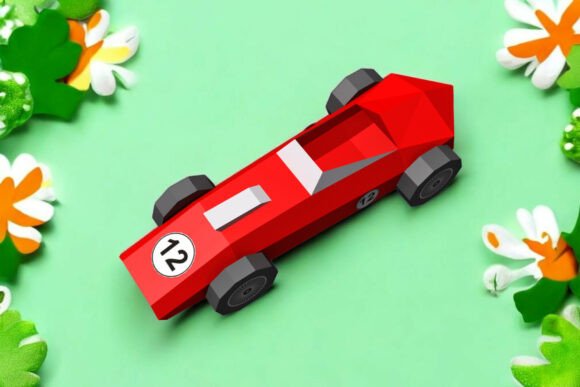
If you have ever watched a Formula One race, you know the sheer precision and engineering marvel that goes into those sleek, low-slung machines. But what if you could hold a piece of that speed in your hands without needing a wind tunnel or a team of engineers? That is exactly where F1 Car Favor - 3d Papercraft comes in. It is not just a toy; it is a digital-to-physical bridge that allows anyone to build a detailed model of a Formula One car right at their kitchen table.
This product offers a unique blend of digital convenience and tactile creativity. You receive digital files—specifically PDF, DXF, EPS, PNG, and JPG formats—that contain the templates for assembling the model. The process is straightforward: you print, cut, score, bend, and glue. Despite its simplicity, the result is a striking 3D representation of an F1 car. When fully assembled, the model measures approximately 7 x 10 x 28 centimeters, providing a substantial enough presence to be a conversation starter while remaining small enough to fit on a desk or shelf. The estimated assembly time is around one hour, making it a perfect project for an afternoon break or a focused creative session.
Why This Project Resonates with Modern Creators
In an era dominated by screens and instant gratification, there is a growing desire for projects that require patience and manual dexterity. F1 Car Favor - 3d Papercraft taps into this trend by offering a "digital craft" experience. Unlike traditional kits that often come pre-cut and pre-painted, this papercraft requires you to source your own materials. This adds a layer of customization and ownership to the final product. You choose the paper weight, the color scheme, and even the finish. Whether you use standard A4 cardstock or experiment with metallic or textured papers, the final outcome reflects your personal touch.
The variety of file formats included (PDF, DXF, EPS, PNG, JPG) ensures compatibility with a wide range of software and printers. For tech-savvy users, the DXF and EPS files can be imported into vector graphics programs like Adobe Illustrator or Inkscape, allowing for further manipulation before printing. This flexibility is particularly valuable for designers and graphic artists who want to tweak the layout or add custom branding to the car’s livery.
Real-World Applications Beyond Hobbyist Fun
While building a model car is undeniably fun, the applications of F1 Car Favor - 3d Papercraft extend far beyond personal entertainment. Here are several realistic scenarios where this resource proves invaluable:
For Educators and Teachers
Physics and engineering teachers often struggle to make abstract concepts like aerodynamics, downforce, and mechanical grip tangible for students. A physical 3D model of an F1 car serves as an excellent teaching aid. Students can examine the front wing, the bargeboards, and the rear diffuser, discussing how each component interacts with airflow. The one-hour assembly time makes it feasible to incorporate this into a classroom activity, fostering teamwork and problem-solving skills as students collaborate to assemble the model. It transforms a lecture on fluid dynamics into a hands-on learning experience.
For Marketers and Branding Professionals
Imagine a marketing agency creating a promotional giveaway for a client in the automotive sector. Instead of another cheap plastic pen or a generic stress ball, they distribute these elegant papercraft models. Because the files are digital, the agency can customize the liveries to match specific brand colors or sponsor logos before sending the files to the client or printing them in-house. This creates a memorable, high-value impression that aligns with themes of speed, precision, and innovation. It is a cost-effective way to produce branded merchandise at scale.
For Content Creators and Bloggers
YouTube creators, TikTokers, and bloggers in the DIY, crafting, or automotive niches are always looking for fresh content ideas. Time-lapse videos of the assembly process are highly engaging and perform well on social media platforms. The visual appeal of transforming flat sheets of paper into a complex 3D object captures attention quickly. Furthermore, reviewing the ease of use, the quality of the instructions, and the stability of the final model provides value to an audience interested in papercrafting. It is a niche topic with a dedicated community eager for new resources.
For Event Planners and Party Hosts
Planning a birthday party for a child who loves cars? Or perhaps organizing a corporate event with a racing theme? These papercraft kits can serve as interactive favors or activity stations. Guests can spend time assembling their own mini F1 cars, taking home a personalized souvenir. The non-toxic nature of paper and glue makes it safe for children under supervision, and the manageable size ensures it does not take up excessive space during the event. It is a thoughtful alternative to disposable party favors.
What You Need to Get Started
One of the most appealing aspects of F1 Car Favor - 3d Papercraft is that it does not require expensive equipment. However, having the right tools significantly improves the quality of the final product. Here is a practical checklist of what you will need:
- A Colored Printer: While black and white works, using color brings the car to life. If you do not have a color printer, you can hand-paint the printed pieces after cutting.
- Cardstock Paper: Standard printer paper may be too flimsy. Using A4 Letter cardstock paper (around 160-200 gsm) ensures the model holds its shape and looks professional.
- Cutting Tools: Sharp scissors are essential for general cutting, but a craft knife and a self-healing cutting mat provide precision for intricate details.
- Glue: A fine-tip glue stick or liquid PVA glue works best. Liquid glue should be applied sparingly to prevent warping the paper.
- Scoring Tools: A bone folder is ideal for crisp folds, but a non-working ballpoint pen also works effectively to create creases without cutting through the paper.
- Ruler: A metal ruler helps guide both the craft knife and the scoring tool for straight, accurate lines.
Considerations Before You Begin
Before diving into the assembly, it is important to manage expectations. This is a papercraft project, not a die-cast metal model. It requires care and patience. The assembly time of one hour is an estimate; beginners might take longer as they familiarize themselves with the folding and gluing techniques. Additionally, the durability of the final model depends largely on the quality of the paper used and the precision of the cuts. Rough handling can damage the delicate structures, so display it with care.
Another consideration is the environmental impact. Since you are printing the templates yourself, you have control over the waste generated. Printing only the necessary pages and using recycled cardstock can minimize your footprint. Moreover, because the files are digital, you can reuse them indefinitely. Print a batch for a classroom, then keep the digital files for future projects or gifts. This reusability adds significant long-term value to the purchase.
Final Thoughts
F1 Car Favor - 3d Papercraft is more than just a pastime; it is a versatile resource that bridges the gap between digital design and physical creation. Whether you are an educator looking to engage students, a marketer seeking unique promotional items, or simply a hobbyist wanting to test your crafting skills, this project offers a rewarding experience. The combination of technical precision and artistic expression makes it a standout choice for anyone interested in Formula One or papercrafting. With just a printer, some paper, and a bit of time, you can bring the thrill of the racetrack into your workspace or home.
If you encounter any questions during the assembly process, remember that the beauty of papercraft lies in the journey. Take your time, enjoy the process, and feel free to ask for help if needed. The satisfaction of holding your very own 3D F1 car is well worth the effort.